Introduction
Maniratan Machinery was established in the year 2017 and since 2020 it has been the Authorized dealer of Renold Chains. Maniratan Machinery is engaged in the manufacturing of Roller Chains, Conveyor Chains, Peg Chains, Stainless Steel Chains, Extended Pin/Rod Chains, Rubber Top Chains, and Biplanar Chains.
Additionally, we also manufacture customized chains based on the sample or picture provided by the customers.
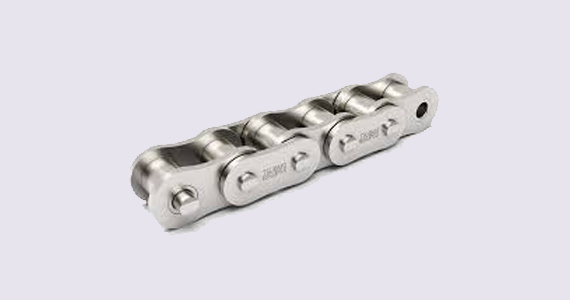
Stainless Steel Roller Chains are resistant to corrosion and are utilized in a variety of demanding settings, including outdoor applications, chemical industries, and food processing. They are perfect for harsh temperatures and washdown situations because they are hygienic, long-lasting, and rust-resistant. Compared to variations made of carbon steel, these chains require less maintenance.
Key Features Of Stainless Steel Roller Chain
- Corrosion Resistance : Designed to resist rust and oxidation in wet, humid, or chemical-laden environments.
- High Temperature Tolerance : Performs reliably in both low and high temperatures without degrading.
- Hygienic and Sanitary : Non-contaminating and easy to clean, making it ideal for food, beverage, and pharmaceutical use.
- Chemical Resistance : Resists acidic, alkaline, and other corrosive substances, extending service life in chemical industries.
- Durability and Longevity : Designed for continuous use and long operational life under moderate loads.
- Low Maintenance Requirements : Requires minimal lubrication and upkeep due to its corrosion-resistant properties.
- Non-Magnetic Options : Available in non-magnetic stainless alloys (e.g., 316 or 304) for sensitive environments.
- Smooth, Quiet Operation : Precision manufacturing results in low vibration and noise levels during operation.
- Wide Range of Sizes and Types : Available in ANSI standard sizes (like #40, #50) and custom variants for various machines.
- Reusable and Eco-Friendly : Stainless steel is recyclable and contributes to sustainable practices.
Types of Stainless Steel Roller Chain :
- Standard Stainless Steel Roller Chain (ANSI Series) : Complies with ANSI standards (such as #40, #50, and #60). utilized in general-purpose applications where resistance to corrosion is necessary. Perfect for clean or damp conditions with light to moderate loads.
- Double Pitch Stainless Steel Roller Chain : Pitch is double that of conventional chains, making it lighter and more cost-effective. frequently seen in long-distance, low-speed conveyor systems. Maintains strength and resistance to corrosion while reducing weight.
- Hollow Pin Stainless Steel Roller Chain : Has hollow pins that make installing cross-rods or other attachments simple. Adaptable to different material handling configurations and conveyor customisation.
- Attachment Stainless Steel Roller Chain : Includes either bespoke or standard attachments (such as A1, K1, and SA1) on links. made to move objects or turn sprockets in conveyors or other specialized equipment. frequently seen in automation, food processing, and packaging.
- Heavy Duty Stainless Steel Roller Chain : Constructed with stronger materials and thicker plates. utilized in settings with greater loads or influence that are more demanding. When strength and resistance to corrosion are required, they are frequently selected for outdoor or industrial applications.
- Nickel-Plated Stainless Chain : Although not entirely stainless, it is plated to improve its resistance against corrosion. provides a less expensive option than chains made entirely of stainless steel. Ideal for mildly corrosive settings, such as warehouses or packaging.
- Leaf Stainless Steel Chain : Built for tension-based tasks like lifting and hoisting; does not require rollers. frequently found in material lifting equipment, elevators, and forklifts.
- 316 Stainless Steel Roller Chain (Marine Grade) : 316 grade stainless steel alloyed with molybdenum was used in its construction. Outstanding resistance to strong chemicals, chlorine, and salt water. Perfect for making pharmaceuticals, chemicals, or ships.
Maintenance and Guidelines and tips for Stainless Steel Roller Chain:
Maintain Stainless Steel Roller chains by using food-grade lubricant, checking for wear on a regular basis, and making sure the tension is correct. Avoid overloading, clean with non-corrosive cleaners, and properly align sprockets. In severe or washdown settings, chain life is extended by proper storage and routine inspections.
- Regular Inspection : Check for wear, elongation, rust, pin loosening, and link damage. Inspect sprocket alignment and chain tension at regular intervals.
- Proper Lubrication : Use a food-grade or non-toxic lubricant for food/pharma applications. Apply lubricant to the chain’s pin and bushing interface, not just the outside.
- Cleaning Schedule : Clean periodically to remove buildup of dust, food residue, or chemicals. Use mild detergents or solvents compatible with stainless steel (avoid chlorine-based cleaners).
- Tension Control : Maintain proper chain slack—typically 2% of the center distance. Over-tension causes stretch and fatigue; under-tension causes jump or derailment.
- Sprocket Maintenance : Ensure sprockets are in good condition and properly aligned to prevent uneven chain wear.
- Environmental Considerations : If operating in harsh environments (salt, acid, alkali), rinse chain regularly. For high-humidity or washdown zones, inspect more frequently.
- Chain Replacement : Replace the chain if elongation exceeds 2% or if link play becomes excessive. Replace the sprockets with the chain to avoid rapid wear of the new chain.
- Storage Tips : Store in a clean, dry environment. Keep away from corrosive chemicals or high humidity when not in use.
Stainless Steel Roller Chain Application Industries
- Food and Beverage Industry
- Pharmaceutical Industry
- Chemical Processing
- Marine and Offshore
- Wastewater Treatment
- Packaging Industry
- Agriculture
- Electronics Manufacturing
- Textile Industry
Automated Machinery and Robotics